Source Third Series Oil Extraction Press for Food, Farms, Shops
Find and compare 30 third series oil extraction press models from China. These machines support automatic operation, handle various seeds like sesame and peanut, and offer capacities ranging from 10-30 kg/h to 300 kg/h. Evaluate specifications including 304 stainless steel construction and CE certification for your processing needs.
Key considerations
Products List




Comprehensive Sourcing Guide
Third Series Oil Extraction Press Sourcing Guide
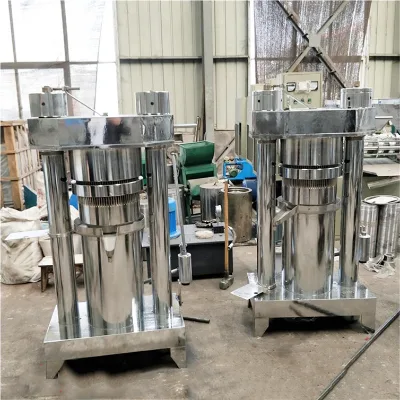
The third series oil extraction press represents a specialized tier of hydraulic machinery designed for medium-scale operations requiring consistent oil yield from diverse seeds. Buyers should recognize that this classification often denotes a specific mechanical iteration focused on balancing throughput with operational simplicity. In the current market, these units are frequently observed with capacities ranging from 10 to 30 kg per hour for oil seeds, making them suitable for small commercial farms or food shops rather than large industrial plants.
When evaluating listings, procurement teams must verify that the "Third Series" designation aligns with the actual structural configuration, such as horizontal arrangements, rather than relying solely on marketing labels. The observed data indicates that these machines often feature automatic grading and are constructed to handle raw materials like sesame, peanuts, and rapeseeds. Understanding this specific series helps buyers distinguish between entry-level manual units and more advanced hydraulic systems that offer both hot and cold pressing capabilities.
Product Scope and Observed Listing Signals
Product listings for this category typically highlight a vertical or horizontal press structure depending on the specific model iteration, with dimensions varying significantly between compact units and larger industrial frames. Buyers should expect to see physical specifications such as 430290210mm for smaller models or larger footprints like 200cmx100cmx120cm for higher capacity variants. The packaging is consistently noted as wooden cases or boxes, which is a critical signal for ensuring the equipment survives international transit without structural damage.
Market signals also reveal a wide variance in power consumption and voltage requirements, with some units operating at 1.5kw while others may require 380V industrial power. The application scope is broad, covering flour, rice flour, starch, beans, and wheat, though the primary function remains oil extraction from seeds. Procurement teams must scrutinize the "Press Series" attribute carefully, as some listings may conflate second or fifth series features with third series models, leading to potential mismatches in expected performance and mechanical design.
Technical Specifications to Verify
Verification of the hydraulic system is paramount, specifically the work pressure and temperature ranges which directly influence oil quality and extraction efficiency. Buyers should confirm that the machine operates within a work pressure of 55-60MPa and maintains a work temperature between 70-90 degrees Celsius to ensure optimal oil yield rates of 60%-80%. These parameters are not merely descriptive but are functional limits that define the machine's ability to process different seed types without overheating or failing to extract sufficient oil.
Capacity and model identification require strict attention to avoid confusion between different production lines. While some models like the HY-01 or F3 offer specific capacities, others may list ranges such as 12-120kg/Hour, which suggests a variable output capability. The material standard, often cited as 304 stainless steel for contact parts, must be verified against the actual build to ensure food safety compliance. Additionally, the automatic grade and key selling points like "Automatic" operation should be cross-referenced with the actual control panel features to confirm the level of automation provided.
Compliance and Safety Documentation
Safety documentation for oil extraction presses must include valid CE certification, which is a frequently observed standard in the supplied product data. This certification indicates that the electrical and mechanical components meet European safety directives, a crucial requirement for importing machinery into many global markets. Buyers should request the full technical file accompanying the CE mark to verify that the specific model, such as the SCO-15 or 6Y-180, has undergone the necessary conformity assessments for its voltage and power specifications.
Beyond electrical safety, the warranty of core components is a vital document that outlines the manufacturer's commitment to long-term reliability. A standard one-year warranty on core components provides a baseline for maintenance planning and risk mitigation. Procurement teams must ensure that the warranty terms explicitly cover the hydraulic pump and motor, as these are the most critical and failure-prone parts of the extraction press. Without clear documentation on warranty coverage, buyers face significant financial risk regarding unexpected repair costs and operational downtime.
Cost Drivers and Commercial Terms
The price range for third series oil extraction presses is highly variable, observed from 210 USD to over 1,000,000 USD, driven primarily by capacity, automation level, and material quality. Lower-cost units often feature manual or semi-automatic operation with smaller capacities, while higher-priced models include full automation, larger stainless steel components, and advanced hydraulic systems. Buyers must correlate the listed price with the specific capacity and power rating to avoid underestimating the cost of a machine capable of meeting their production targets.
Commercial terms such as lead time and minimum order quantity (MOQ) are critical for supply chain planning. Delivery dates can range from two weeks to 3-5 days, depending on the supplier's production schedule and the specific model ordered. The MOQ is typically low, ranging from 1 to 2 units, which allows for flexible procurement strategies. However, buyers should clarify whether the quoted price includes the wooden case packaging and if the delivery time accounts for the origin location, which is often Henan, China, affecting shipping logistics and total landed cost.
Supplier Qualification and Quality Control
Supplier qualification should focus on the place of origin and the consistency of product standards across their catalog. Many suppliers are located in Henan, China, a known hub for agricultural machinery, but buyers must verify that the specific factory adheres to the stated standards like 304 stainless steel construction. The presence of a "New-Type Hydraulic Oil Press" designation suggests innovation, but this should be validated through technical drawings or third-party inspection reports to ensure the design claims are accurate.
Quality control processes must extend beyond the initial factory inspection to include pre-shipment testing of the core components. Buyers should request evidence of the one-year warranty on core components and verify that the machine has been tested for its specified work pressure and temperature limits. The application of the machine to industries like farms and home use implies a need for robust, user-friendly designs. Ensuring the supplier provides clear instructions for maintenance and operation is essential for maintaining the machine's performance over its intended lifespan.
Long-Term Procurement Checks
Long-term procurement success depends on the availability of spare parts and the durability of the machine's core components. Buyers should establish a relationship with the supplier to ensure a steady supply of hydraulic seals, filters, and other wear items that are specific to the third series design. The automatic grade and key selling points like "Automatic" operation suggest a reliance on electronic controls, which may require specialized technical support and replacement parts that are not universally compatible with other models.
Finally, buyers must monitor the machine's performance against the initial specifications, particularly the oil yield rate and capacity, to ensure it meets operational expectations over time. Regular maintenance checks should be scheduled to verify that the work pressure remains within the 55-60MPa range and that the work temperature does not exceed 90 degrees. By tracking these metrics, procurement teams can identify early signs of wear or degradation and take corrective action before they impact production efficiency or oil quality.
FAQs
What is the capacity of the third series oil extraction press?
The third series oil extraction press offers a capacity of 10-30 kg/h for oil seeds. This range supports small-scale production needs effectively. The machine is designed to handle various seeds efficiently. It ensures consistent output for commercial or home use applications. This capacity balances speed with quality extraction results for users.
Can the third series oil extraction press handle both hot and cold pressing?
Yes, the third series oil extraction press supports both hot and cold pressing methods. This versatility allows users to choose the best method for their specific oil seeds. It accommodates different processing requirements for sesame, peanut, and rapeseeds. The machine adapts to various operational needs for optimal oil yield.
What is the delivery time for the third series oil extraction press?
The delivery time for the third series oil extraction press is typically 3-5 days. This quick turnaround ensures timely receipt for urgent production needs. The supplier prioritizes efficient logistics to meet customer schedules. Buyers can plan their operations around this reliable and fast delivery window.
What certifications does the third series oil extraction press have?
The third series oil extraction press holds CE certification. This indicates compliance with European safety and quality standards. The certification ensures the machine meets rigorous industrial requirements. Buyers can trust the product for safe and reliable operation in various markets.
What is the warranty for the core components of the press?
The core components of the third series oil extraction press come with a 1-year warranty. This coverage provides peace of mind for long-term investment. It protects against manufacturing defects in essential parts. Buyers benefit from this assurance for sustained operational reliability and support.
How is the third series oil extraction press packaged for shipping?
The third series oil extraction press is packaged in a wooden box. This sturdy packaging protects the machine during transit. It ensures the equipment arrives in pristine condition. The wooden case provides adequate protection against handling damage and environmental factors.